|
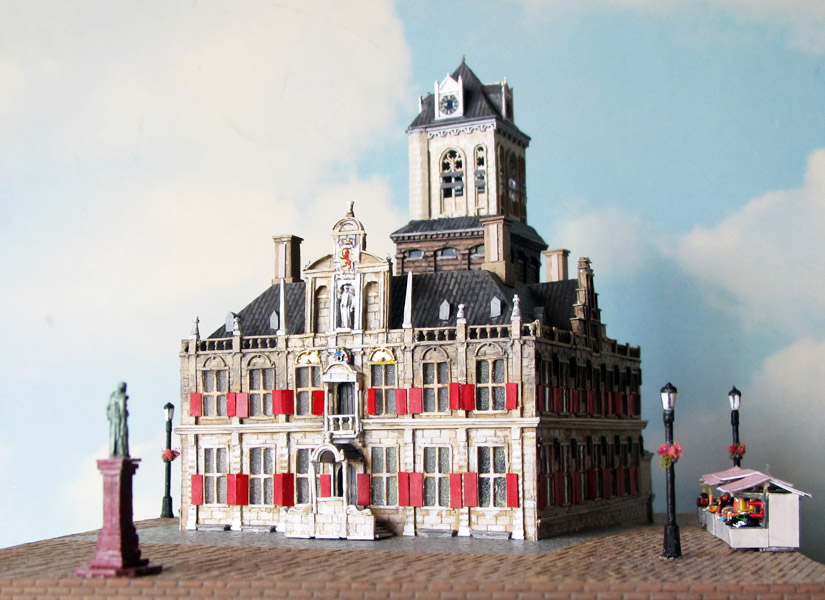
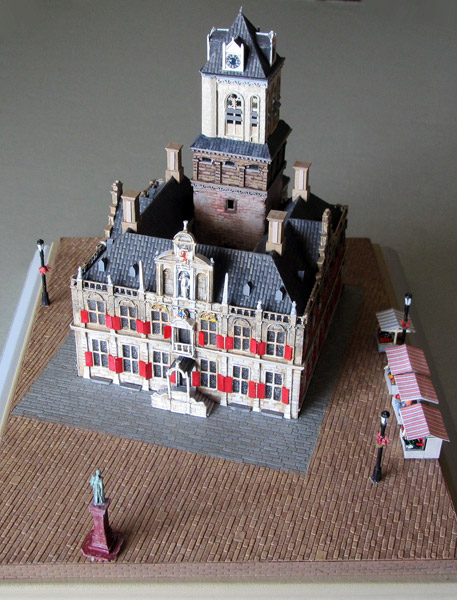
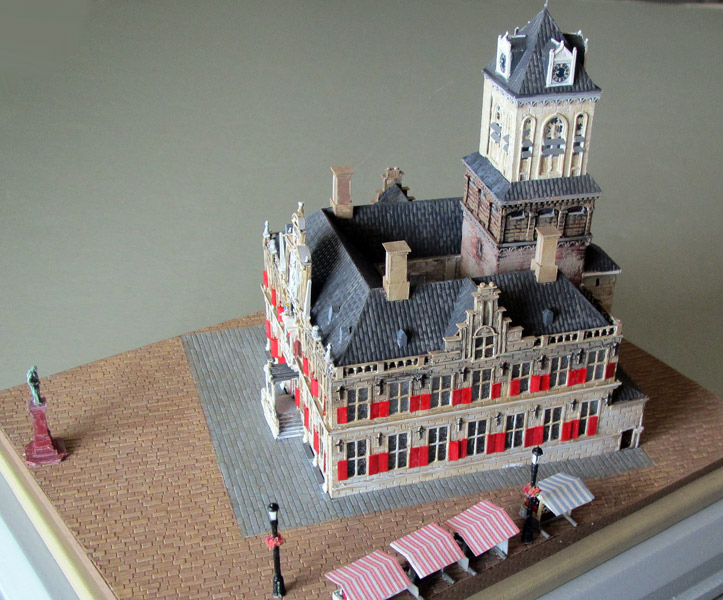
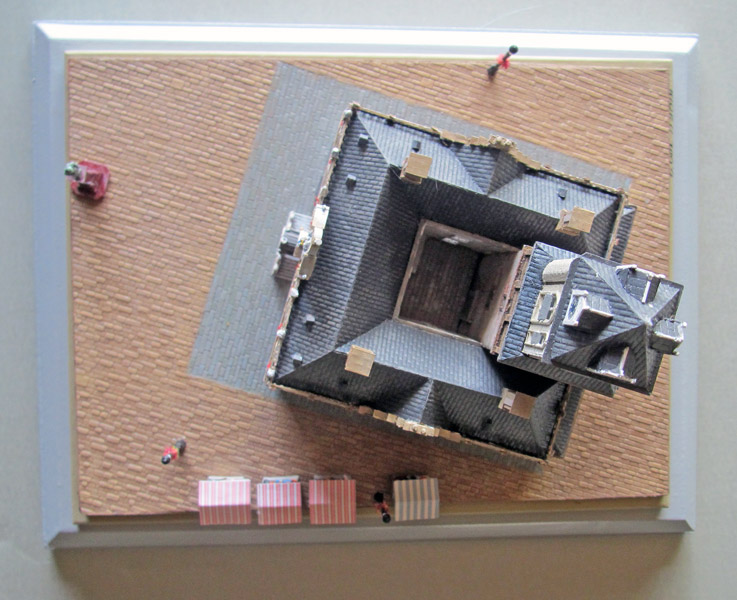
Delft City Hall on Market Square was designed by architect Hendrick de
Keyser in the 17th century after the medieval building burned down in 1618.
De Keyser was considered one of the best architects of his time and left two
major landmarks in Delft: the grave monument of Prince William of Orange at
the Nieuwe Kerk and City Hall on Market Square. Today Delft City Hall is
one of the city’s most famous monuments and with its famous red shutters, is
quite distinctive.
This
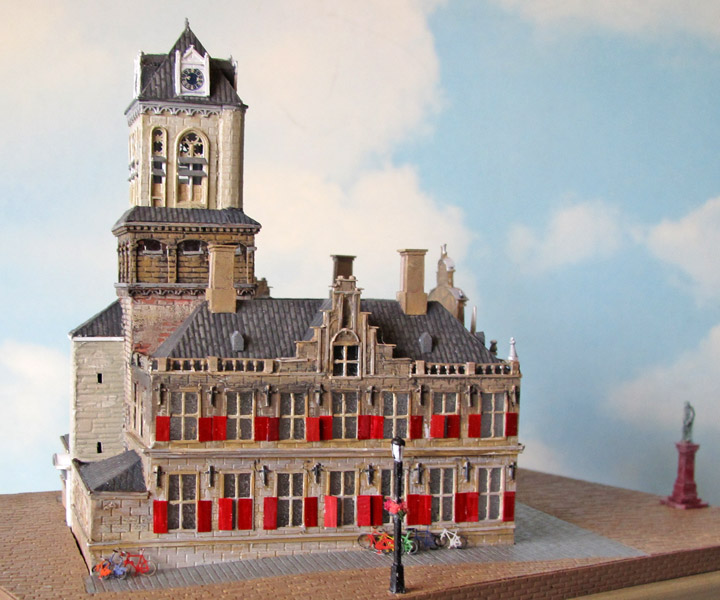
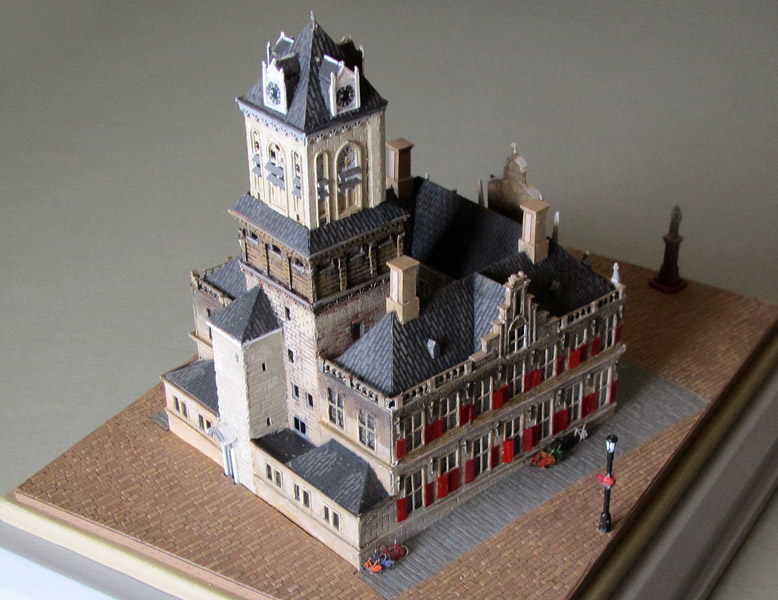
landmark is a perfectly balanced, virtually symmetrical building in the
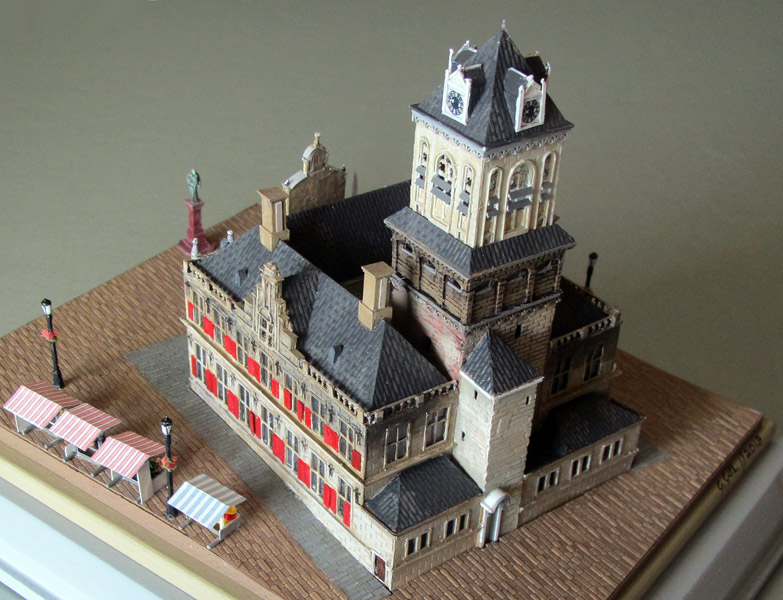
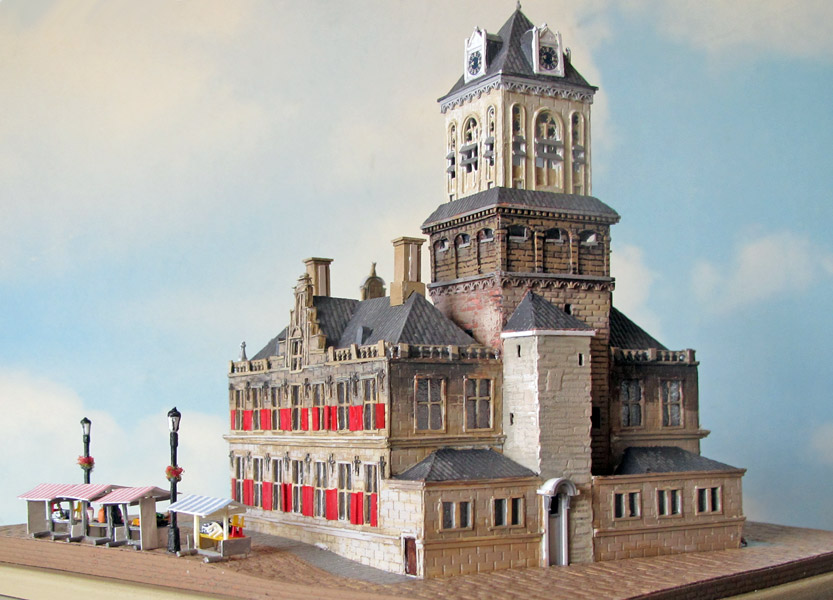
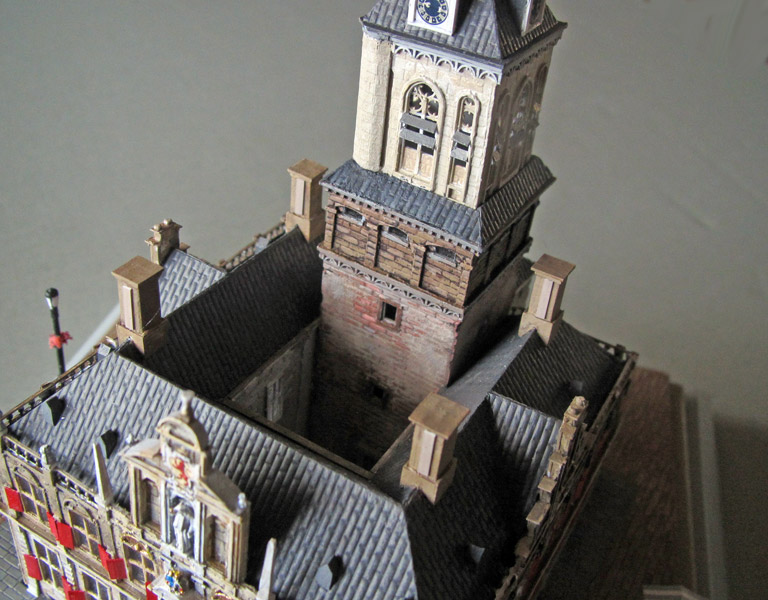
Renaissance style. It was built around the 1300 Gothic tower, which is
clearly visible at the back of City Hall. ‘Het Steen’ or "The Stone", as
the tower is named, was used as a prison. and still houses a medieval prison
with torture instruments. It has decorative clockfaces from 1536 and the
bells were made by
Hendrick van Trier and
Francois Hemony.
The oldest part is covered in limestone, a building material often used in
important renaissance buildings.
The tower can be visited with a tour guide by
appointment only.
City Hall was the former seat of the city's government, and today the place
where residents hold their civic wedding ceremonies. It's where the Delft
artist Vermeer fulfilled his pre-marriage requirements with wife to be,
Catharine Bolnes. It is a great example of renaissance architecture.
Besides being an important Delft structure, it is indeed a very impressive
one.
City Hall was restored in the 20th century to its Renaissance appearance.
Today Market square is very lively - always something going on, and
fantastic for people watching.
The prominent
statue on Market Square between City Hall and the Niewe Kerk is Hugo
Grotius. He was one of the most distinguished law makers and author of many
international sea laws and a native of Delft. He was particularly known for
his advocacy of religious tolerance. Because his ideas often sided with
equality and diplomatic ways to solve religious and political conflicts, he
was imprisoned, and exiled to Paris - never allowed to come back. He died
in 1645. |