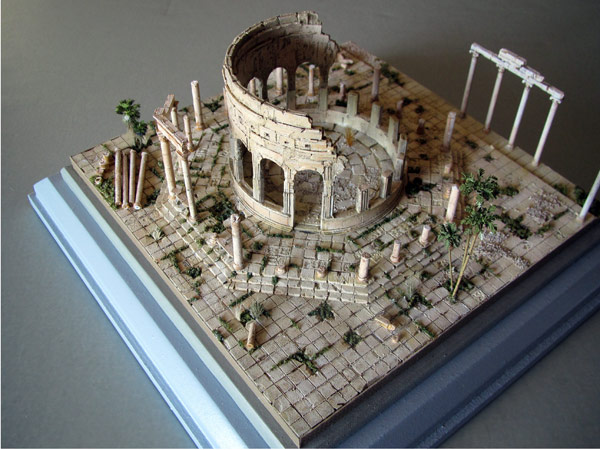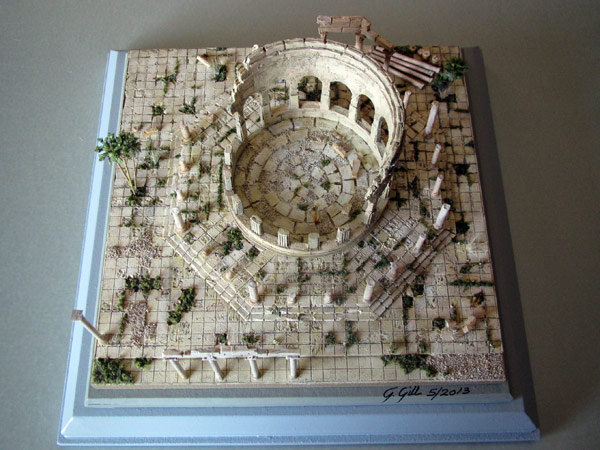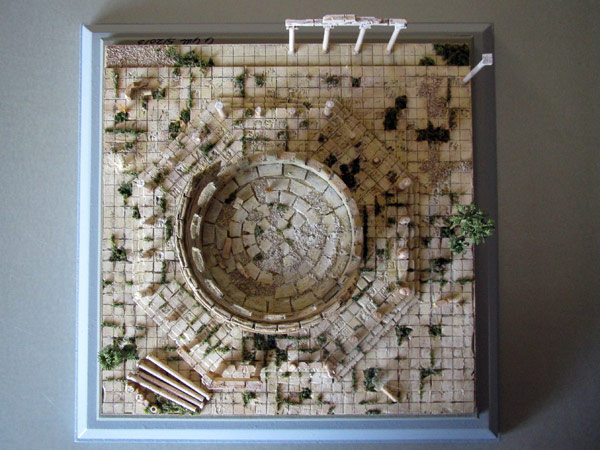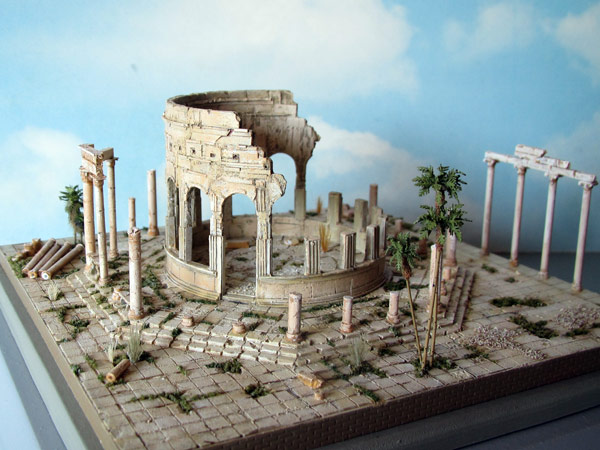
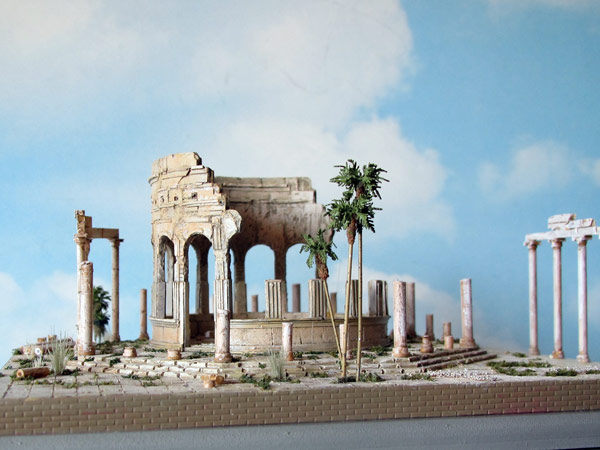
LEPTIS MAGNA MARKETPLACE . Libya 6.5"
x 6.5" x 3"
tall
LEPTIS MAGNA MARKETPLACE . Libya 6.5"
x 6.5" x 3"
tall
 |
|
|
|
|
|
|
Leptis Magna, in Libya, was a prominent city of the Roman Empire. It was founded around 1000 BC, but didn't achieve prominence until the 4th century BC. Under Roman emperor Tiberius, it became one of the leading cities of Roman Africa and a major trading port. In 193, a native son, Lucius Septimius Severus became Emperor. He favored his hometown and the buildings and wealth he lavished on it made Leptis Magna the third most important city in Africa. It was one of the most beautiful cities of the Roman Empire, with its imposing public monuments, marketplace, storehouses, shops, and residential districts. Among the changes the new Emperor introduced were to create a magnificent new forum and to rebuild the docks. But Leptis over-extended itself during this period and by the third century trade declined dramatically. Leptis Magna fell into a decline and by the 4th century, large parts of the city were abandoned. From then on, one after another conqueror sacked the city and by 650 it was totally abandoned. The city was buried under drifting sands and after a long archaeological exploration has now been revealed, piece by piece. It is an incredibly well preserved site. Today, most visitors to the area are from the Mediterranean Cruise ships who stop at nearby Tripoli. The marketplace was an important element of everyday life in Leptis Magna. This beautiful building with it's arches and colonnades is well preserved. The central circular building may have been designated for fish. =<><><>=
|
| CLOSE THIS PAGE |